Literacy and Reading
At The Prescot School, reading and literacy sit at the heart of our curriculum. We believe that every teacher is a teacher of reading and that strong reading is foundational knowledge: enables pupils to access learning across every subject, express themselves with confidence, and succeed academically and beyond.
Our approach to reading is deliberate, inclusive, and ambitious. We prioritise early identification, expert teaching, targeted intervention, and a genuine culture of reading for pleasure.
Our Whole-School Reading Strategy
Reading is taught explicitly and systematically from Year 7 onwards, with clear progression in:
- Fluency – reading accurately, confidently, and at an age-appropriate pace
- Vocabulary – understanding, retaining, and applying new words
- Comprehension – interpreting, inferring, and analysing increasingly complex texts
- Oracy – articulating ideas clearly through structured talk
Our full Reading Strategy and Intervention Document outlines:
- How reading is taught across subjects
- How pupils are assessed
- How gaps are identified and closed
- How reading is celebrated across the school
Read our whole strategy here: Reading Provision.docx
Reading Across the Curriculum
Reading is not confined to English lessons. All subjects play an active role in developing pupils as confident readers. Explicit vocabulary instruction with teachers routinely pre-teaching key vocabulary is a key part of our lessons structure.
Frayer Models are used across subjects to deepen understanding of:
- Definitions
- Contextualising the word through synonyms and antonyms, examples and non- examples or through the word in practice
- Word roots and etymology
- Conceptual thinking
This ensures pupils can access subject-specific language and apply it confidently in both spoken and written work.
Oracy and Reading Aloud
- Teachers regularly model fluent reading
- Pupils read aloud in structured, supportive ways
- Talk is scaffolded using sentence stems and discussion protocols during turn and talk or whole class discussion.
Form Time Reading Programme
Every pupil reads regularly as part of our form time reading programme, reinforcing reading as a daily habit.
This programme includes:
- Carefully selected age-appropriate and challenging texts to inspire discussion
- Reading briefings to support consistency and confidence
- Shared language around reading strategies and expectations
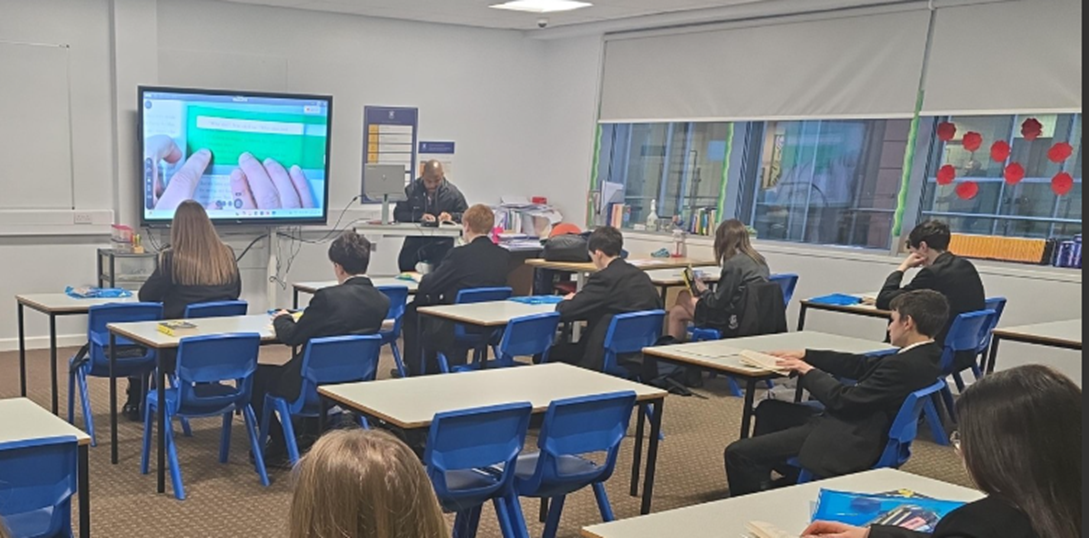
Form time reading helps pupils to:
- Build reading stamina
- Encounter ambitious vocabulary
- Develop enjoyment and confidence in reading
Watch an example of our reading briefing here: Week 4.mp4
Targeted Reading Interventions
We recognise that pupils arrive with different starting points. Early identification and timely support are central to our approach.
Our reading interventions include:
Lexonik Leap: Supporting pupils to decode, spell, and understand complex vocabulary through structured linguistic instruction.
Lexia: Personalised, adaptive reading support targeting phonics, fluency, and comprehension gaps.
Guided Reading: Small-group reading sessions focusing on fluency, inference, and comprehension.
TPS FLUENT (KS3)
Our bespoke TPS FLUENT Reading Lessons explicitly teach:
- Reading fluency
- Vocabulary acquisition
- Comprehension strategies
Phonics and Fluency (Specialist-Led)
- Pupils requiring early reading support, including some older pupils and EAL learners, receive:
- Systematic synthetic phonics
- Explicit fluency instruction
- Teaching delivered by a specialist reading teacher
All interventions are:
- Closely monitored
- Regularly reviewed to ensure they are meeting the needs of students
- Adapted quickly to ensure rapid progress
Reading Rulers: Evidence-Informed Practice
We use Reading Rulers consistently across classrooms to:
- Reduce cognitive overload
- Support tracking and focus
- Improve reading accuracy and comprehension
Their impact is evidenced through:
- Lesson observations
- Pupil voice
- Improved engagement and reading confidence
Spelling and Literacy Development
Termly Spelling Bee
Our termly spelling bee celebrates:
- Accuracy
- Vocabulary knowledge
- Confidence
Spelling is taught explicitly and reinforced through:
- Curriculum sequencing
- Vocabulary instruction
- Writing across subjects
Celebrating Reading: Our Libraries
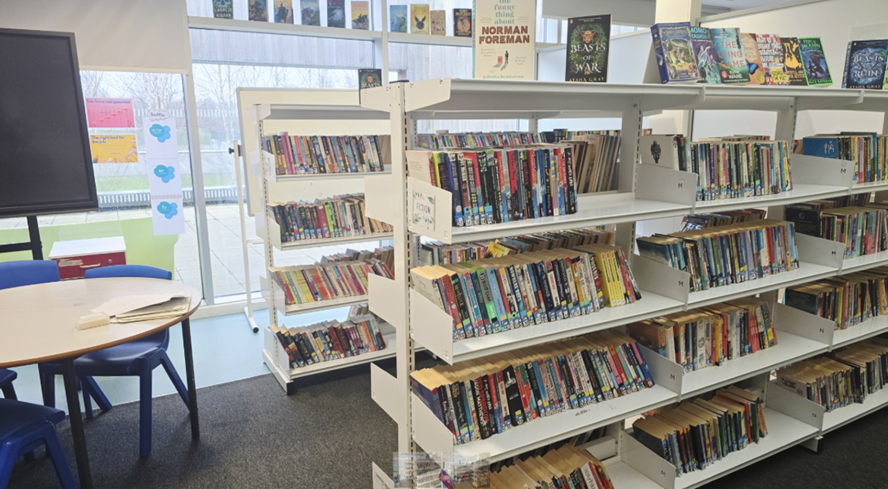
Reading for pleasure is actively promoted and celebrated. We have invested in a welcoming space which sits at the heart of English. This ensures the library and reading is visible and seen as a welcoming space. Last term we had 2695 visits to our libraries, physical and online, more engagement than ever! This is during lunch time, after school and half termly visits to built into the KS3 curriculum.
Physical Library
A welcoming, well-used space Regular pupil visits and borrowing Supported reading sessions and independent choice
Online Library
Accessible to pupils at home and in school Supports equity of access to reading material
Monitoring Progress and Impact
Reading attainment is:
- Assessed regularly using standardised measures
- Reviewed by leaders to identify trends and gaps
- Used to inform teaching, intervention, and CPD
This ensures all pupils, including those with SEND and EAL, are supported to access the full curriculum.
Our Commitment
At The Prescot School, reading is:
- Everyone’s responsibility
- Explicitly taught
- Carefully monitored
- Actively celebrated
By placing literacy at the centre of school life, we ensure that pupils leave us as confident readers, articulate communicators, and successful learners.